
The Tata group is planning to invest $90 billion in new industries such as mobile components plant, semiconductor, electric vehicles, batteries, renewables energy and e-commerce by 2027. The Tata group's investment in India is far higher than the $75-billion investments planned by Mukesh Ambani-owned Reliance Industries and $55-billion investment planned by the Adani group in the next five years in the country, the Economist reported recently. The investment by the Tata group is a shift in its strategy to focus more in the home markets instead of international markets where the group lost money.

This would be India's largest crowd-funded programme to help patients with a particular disease.
As many as 34 new drugs were added to and 26 dropped from an updated list of essential medicines on Tuesday, with the government saying this will reduce "patients' out-of-pocket expenditure". The National List of Essential Medicines (NLEM 2022) has 384 drugs, up from 376 in 2015. "Drafting this list is a lengthy process, and around 350 experts from across India have held over 140 consultation meetings to draft the NLEM 2022," Union Health Minister Mansukh Mandaviya said.

The Adani group said Reliance Infrastructure, part of the Reliance Anil Dhirubhai Ambani Group, had initiated arbitration on one specific dispute under the Share Purchase Agreement (SPA) in December 2021 with a claim for just Rs 500 crore. Adani said it has filed counterclaims against the Ambani company. The Adani group firm, Adani Electricity was reacting to a Reliance Infrastructure statement of last week, which said it has filed an arbitration claim of Rs 13,400 crore against Adani Group in the Mumbai Centre for International Arbitration (MCIA). Reliance had cited a breach of a December 2017 share purchase agreement relating to the transfer of its Mumbai power distribution business to Adani Transmission.

'Just put a patch on your arm and the vaccine can be absorbed by the body.'

Reliance Industries (RIL) is likely to be the lone bidder for Mangalore-based JBF Petrochemicals, which is up for sale after defaulting on bank loans worth Rs 5,000 crore. The lenders for the second time extended the deadline for submission of bids, which had ended on August 20, as several players, including public sector companies, were redrawing their acquisition plans, said people in the know. "There were several companies which had submitted their expressions of interest (EoIs) for the company but after due diligence decided to exit the race," said a source close to the development. "The new deadline for submitting financial offers is August-end," the source said.
'Gift-giving' - from free dinners and drug samples to promotional merchandise - seems to be driving drugmakers' marketing - a marketing prescription deeply entrenched in the industry. This is a well-oiled racket that sees pharmaceutical (pharma) companies 'gifting' doctors to push their respective drugs under the guise of marketing. But is there a cure in sight to end this unhealthy alliance? The recent controversy following the income-tax raids on Bengaluru-based drugmaker Micro Labs, makers of popular paracetamol brand Dolo-650, has brought this to the fore, again.

'The tie-up with Serum Institute Life Sciences brings to the table their strengths in manufacturing and also their vaccine portfolio.'

'We are trying to salvage 50-100 million doses of Covishield with the latest drive on booster doses.'
Bulk of the medicine sales in the $22-24 billion domestic pharma market happens through offline retail chemists. With the entry of online pharmacies, this space has started to witness a shake-up. Sample this: Dawaa Dost, a Rajasthan based digital health start-up, generates medicine orders from 'kirana' stores and women self-help groups (SHGs) that operate in villages, and then service these orders through its affiliated network of pharmacies. Biddano, another health-tech start-up, has a platform that acts as an aggregator for neighbourhood chemist shops.

Reliance Industries, the Tata group, Bharti Airtel and Aditya Birla are among Indian conglomerates that have hedged their revenue and costs linked to the US dollar, giving them financial cover as the rupee fell past 80 against the greenback on Tuesday.

India's medical devices imports surged 41 per cent to touch Rs 63,200 crore in 2021-22, led by a 48 per cent year-on-year (YoY) jump in imports from China to Rs 13,538 crore, the commerce ministry data analysed by the Association of Indian Medical Device Industry (AiMeD) has showed. Local industry players say this has led to several small and medium units to shut shop. Rakesh Vaid of Usha Fabs, a garments exporter, had started making N95 masks in his Gurgaon factory during the peak of the Covid-19 pandemic.

The Tata Tech IPO will be the first from the Tata group since TCS listed its shares in 2004.
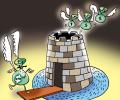
As the Indian currency hovers around its lowest versus the US greenback, several smaller and mid-sized companies are expected to face rough weather as almost 44 per cent of the foreign loans taken by Indian companies remained unhedged. According to the data sourced from the Reserve Bank of India, Indian companies raised around $38.2 billion in the financial year ended in March. Of this, only 56 per cent of the loans are hedged while the rest of the foreign loans remain unhedged, thus risking the companies to forex volatility.

The central government has for the first time allowed a private company, Bajaj Healthcare, to process opium to extract alkaloids used to make pain-killers, cough syrups, and even cancer drugs. Two government factories in Ghazipur, Uttar Pradesh, and Neemuch, Madhya Pradesh, do the work yet, processing some 800 tonnes of opium gum annually to extract alkaloids. The government on Tuesday gave Thane-based Bajaj Healthcare an initial contract to process 500 tonnes of opium gum annually and wants production to be at 800 tonnes per annum (tpa) in the next five years, indicating the state's exit from the highly-regulated sector.
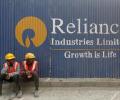
Institutional shareholders of Reliance Industries Limited (RIL) are expecting big-ticket announcements from the company, including timeline for listing of its telecom and retail subsidiaries. They expect this to unlock value in the company, which has seen a sharp fall in market valuation on Friday. This is due to windfall tax imposed by the Centre on refiners and oil producers.

American retail major Walgreens Boots Alliance on Tuesday said it would retain its pharma retail business - Boots UK - thus abandoning the entire sale process. The company did not make any comment specifically on the offer made by Mukesh Ambani-owned Reliance Industries (RIL), which had made a bid for the company last month. "As a result of market instability severely impacting financing availability, no third party has been able to make an offer that adequately reflects the high potential value of Boots and No7 Beauty Company.

In one of the biggest donations by a business family in India, the family of Adani Group chairman Gautam Adani on Thursday committed to donating Rs 60,000 crore (around $7.7 billion) to various charities related to health care, education, and skill development. The commitment has been made to mark Gautam Adani's 60th birthday on Friday as well as the birth centenary year of his father Shantilal Adani. The corpus will be administered by the Adani Foundation. "At a very fundamental level, [programmes] related to all these three areas should be seen holistically and they collectively form the drivers to build an equitable and future-ready India.
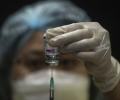
Pune-based Serum Institute of India (SII) is sitting on 200 million doses of Covishield that were manufactured in December and are set to expire in September. The company is likely to destroy these vaccines if nothing works out, Sohini Das reports.

'There will be ups and downs, and we have to plan how we live with it now.'
 © 2026 Rediff.com - Investor Information - Advertise with us - Disclaimer - Privacy Policy - Sitemap - Feedback - About us - Terms of use - Grievances